The dry season
June to October
Clear skies, firm tracks and animals gathering near water. The rim is cold in the early morning.
Best for
Easy game viewing and sharp photographs.
Keep in mind
The busiest time, so an early start matters.
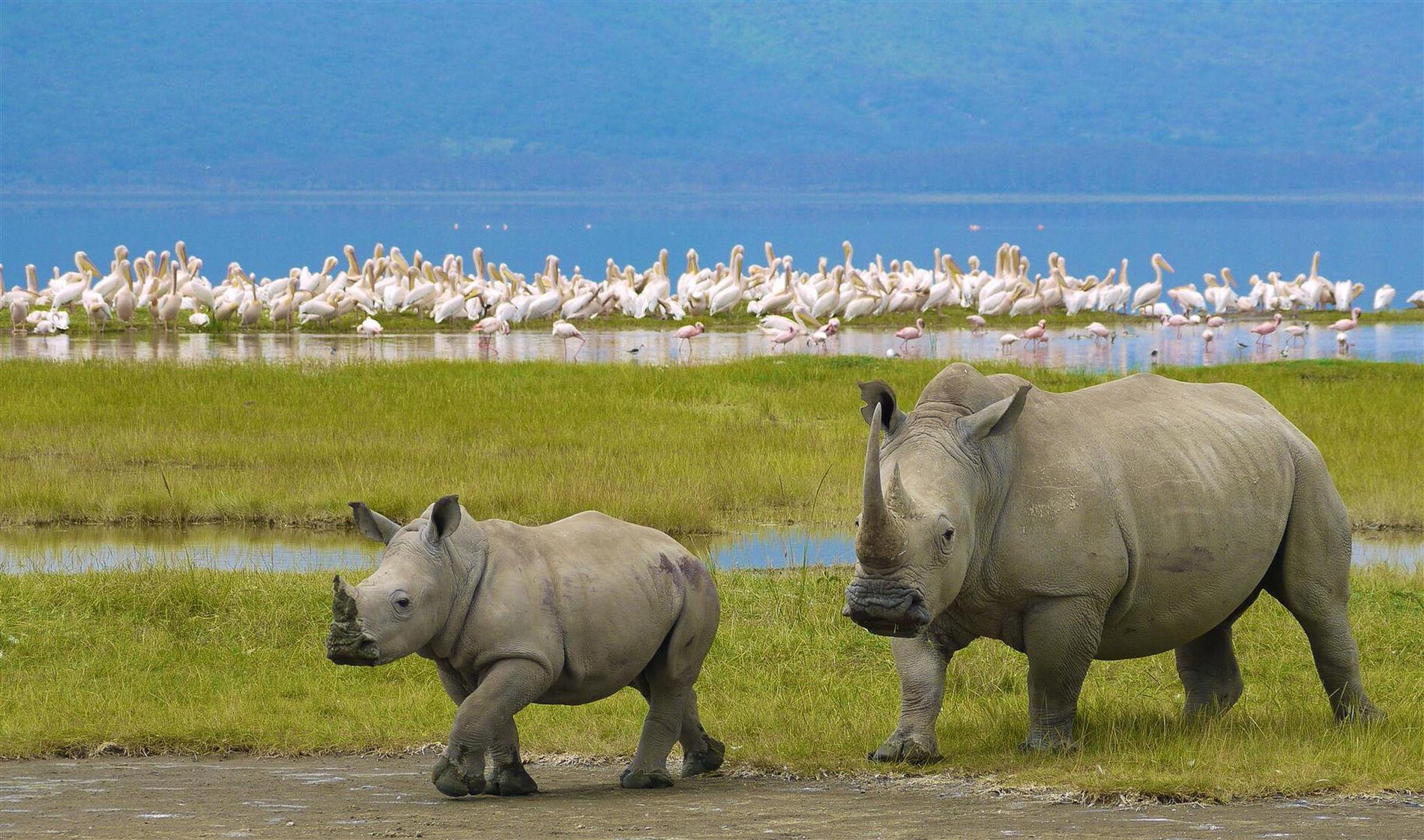
Ngorongoro is a collapsed volcano 19 km wide, and its floor is one of the most crowded wildlife stages on the continent. Descend at first light and spend a day among lions, elephants, flamingos and the rare black rhino.
The crater at a glance
About 600 m deep
Roughly 25,000 large animals on the floor
Open all year, with a limit of about six hours on the crater floor, so an early start is everything.
The Ngorongoro Crater is a place of rare concentration and astonishing scale: an immense natural amphitheatre where every turn reveals another layer of Tanzania’s wilderness.
From open plains and shimmering wetlands to the crater rim’s sweeping views, a Ngorongoro safari combines remarkable scenery with the chance to see an extraordinary range of wildlife in a compact, dramatic setting. Steep walls hold the community together, so the animals you meet here live their whole lives in one enormous bowl.
Over millions of years, a volcano thought to have stood as high as Kilimanjaro was built up by eruption after eruption.
Roughly two to three million years ago, its magma chamber emptied and the summit fell in on itself, leaving a vast caldera.
Rain filled the bowl with grass, springs, a forest and a soda lake, and its steep walls sheltered a largely resident community of animals.
A crater safari has a natural shape: down at first light, across the floor, lunch by the springs, and back up. Step through the day below, or select any stop on the map.
About 2,300 m above sea level
First light, about 06:00
You begin above the clouds. The rim is cool and often wrapped in mist, and the first look down into a green and gold bowl 19 km wide is the moment most people remember from the trip.
Bring a warm layer. It can feel like a different country up here compared with the plains below.
Being honest about what to expect makes a better day. Here is how sightings usually break down.
The crater’s density means the everyday sightings are exceptional.
Zebra and wildebeest
Large herds on the open plains, year-round.
Gazelles, eland, hartebeest
Thomson’s and Grant’s gazelles are everywhere on the grass.
Lion
Resident prides that hunt in the open and are often near the road.
Spotted hyena
Numerous clans, often seen hunting, resting or at the lake.
Golden jackal
Small, bold and easy to spot, especially in the morning.
Hippo
At the Ngoitokitok pool, usually half-submerged.
Elephant
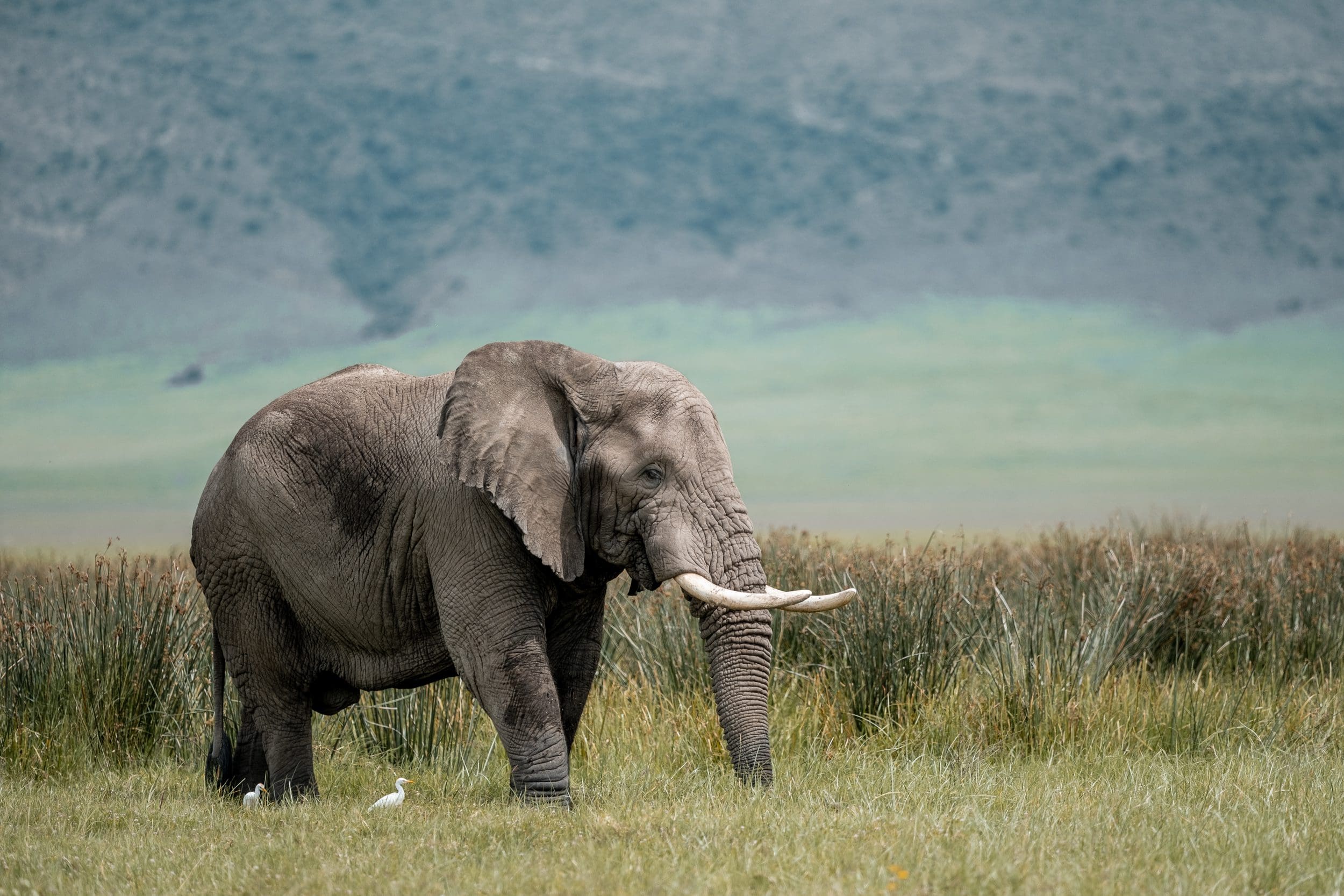
Mostly older bulls, often with large tusks, around Lerai Forest.
A sighting here is something to be pleased about, not something to expect.
Black rhino
A small, closely protected population. Usually seen far off on the plains.
Cheetah
Present on the open grass, though seen less often than lion.
Serval
A slender, long-legged cat of the tall grass and swamp edges.
Leopard
Shy and rarely seen, mostly around Lerai Forest.
Flamingos
At Lake Magadi when water levels are right.
Knowing what is missing helps you set the right expectations.
Giraffe
Generally absent from the crater floor. You will see them elsewhere on the trip.
Impala and topi
Also generally absent, though common in the Serengeti.
Big migration herds
The crater’s herds are largely resident. The great migration is in the Serengeti.
Unlike the migration, the crater’s residents do not travel, so there is no wrong month. Here is what changes.
June to October
Clear skies, firm tracks and animals gathering near water. The rim is cold in the early morning.
Best for
Easy game viewing and sharp photographs.
Keep in mind
The busiest time, so an early start matters.
November and December
Green grass, dramatic skies and the occasional afternoon shower. Migrant birds arrive.
Best for
Fresh landscapes and quieter roads.
Keep in mind
Showers can interrupt the afternoon.
January and February
Warm and mostly dry between the rain seasons, with lush plains.
Best for
Pairing the crater with the calving season on the southern Serengeti plains.
Keep in mind
Some cloud is likely at the rim.
March to May
Wet, very green and quiet, with the rim often wrapped in cloud.
Best for
Fewer vehicles, lush scenery and better value.
Keep in mind
Some tracks are muddy. Bring waterproofs.
The crater is only one part of the Ngorongoro Conservation Area. Add a day or two and the story gets deeper.
A dry canyon where fossils and stone tools helped reveal key chapters of early human evolution. A small museum tells the story of the Leakey excavations.
Half a day
A smaller, forested caldera holding a deep lake, often with flamingos. You walk with a ranger along the rim or down to the shore, with Ol Doinyo Lengai, an active volcano, on the horizon.
Half to full day
Maasai communities live across the highlands of the conservation area and graze livestock alongside wildlife. We can arrange respectful visits led by local guides, so your time benefits the community directly.
A few hours
From January to March the southern Serengeti plains around Ndutu are filled with calving wildebeest, a natural extension to a crater safari.
A separate stay
Planning to add the Serengeti? See how the migration moves through the year.
Illustrative routes. Every safari is tailored to your dates, pace and budget.
2 nights, best in any season
6 to 7 days, best in June to October
5 days, best in January to March
The questions we hear most often. If yours is not here, ask us.
Vehicles are limited to about six hours on the floor, so an early start matters. Descending at first light gives you the most time, the best light and quieter roads.
Yes. The two feel very different. The Serengeti is about scale and movement, while the crater is about concentration: a huge variety of animals in one compact, dramatic setting, with a very good chance of predators and, with luck, a black rhino.
The rim sits around 2,300 m, so early mornings are cold and often misty even in the dry season. Wear layers and take a warm jacket. By midday on the floor it is usually warm.
Lion, elephant, buffalo and black rhino live in the crater, though the rhinos are usually distant and only a small number remain. Leopards are present but rarely seen. Guides can tell you honestly what is likely on your day.
It is one of Tanzania’s most popular places, so yes, especially around midday and at the picnic site. We manage it by descending early, choosing quieter tracks and timing lunch away from the peak.
Walking is not allowed on the crater floor for safety reasons. You can walk with a ranger on the rim and at places such as Empakaai Crater, and you can stretch your legs at the picnic site.

Tell us when you are travelling and how you like to spend your days. We will plan your descent, your route and the rest of your Tanzania safari around it.
Start planning