Hot and mostly dry
January and February
Warm sea, strong sun and steady northeast winds (kaskazi) on the east coast.
Best for
Beach days and kitesurfing.
Keep in mind
It can be very hot and humid at midday.
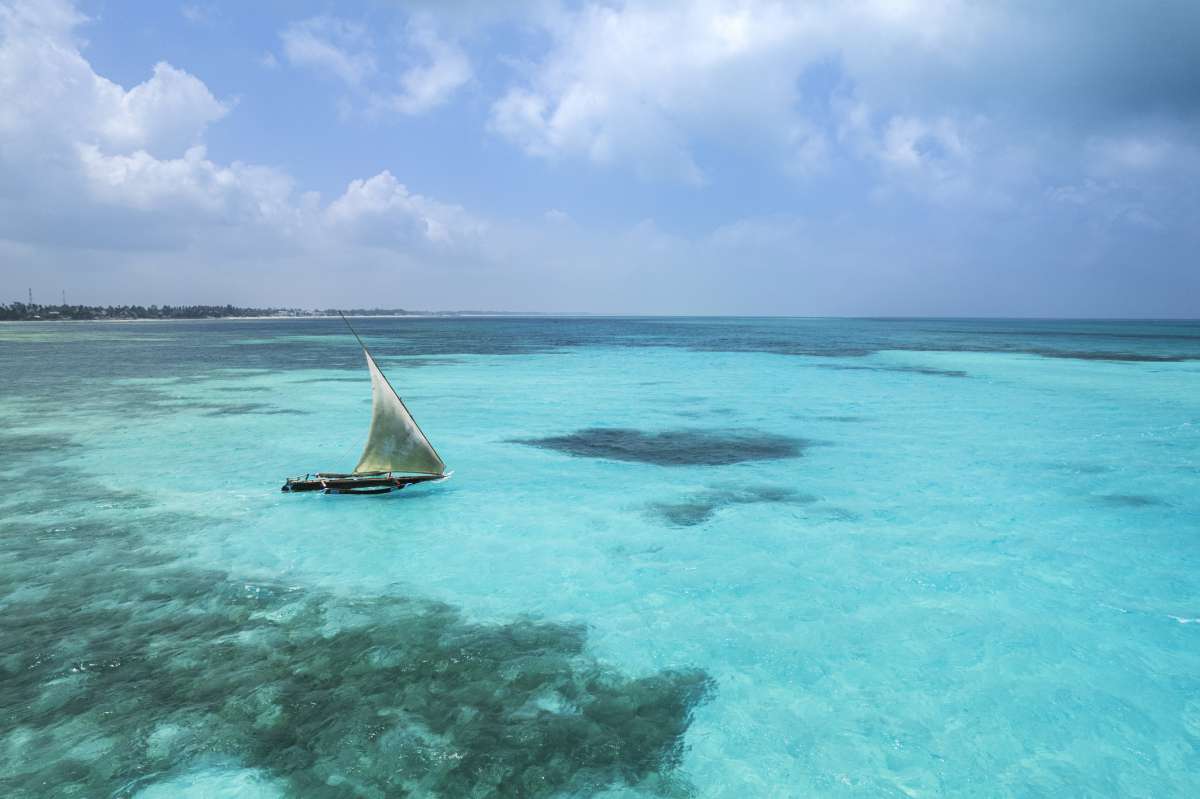
Zanzibar is a meeting place of cultures, coastlines and centuries of stories. Wander Stone Town, follow the scent of cloves, swim in clear water, and leave room for days with no agenda at all.
The island in September
Cool and dry
Clear skies and the most reliable weather for sea days.
Every coast behaves differently, especially with the tide. Find yours below.
Zanzibar rewards people who slow down. The days here follow the tide, the wind and the heat, not the clock, and the island is made for exactly that.
It also pairs beautifully with a mainland safari. After early starts and long game drives, a few days by the sea is the perfect way to end a Tanzania journey.

For more than a thousand years, traders sailed to Zanzibar on the seasonal monsoon winds, linking East Africa with Arabia, Persia and India. Swahili culture grew from that meeting of peoples.
In the 19th century the Omani sultan moved his court here and clove plantations spread across the island. Zanzibar was also a major hub of the East African slave trade, a history you can learn about, with care, in Stone Town.
Zanzibar became a British protectorate in 1890 and joined Tanganyika in 1964 to form Tanzania. Today it is a place where old lanes, spice farms and modern beach life sit side by side.
Zanzibar’s beaches are not interchangeable. The tide, the wind and the villages change from one shore to the next. Select a place, and switch between high and low tide to see what it does to the sea.
Schematic map of Unguja, not to scale.
The tide
At high tide the sea reaches the shore along the east coast. This is the time to swim there.
Culture, history and food
The historic heart, on the west coast
The waterfront is a working harbour, not a swimming beach. The sea here is for dhows and ferries.
Cover shoulders and knees in Stone Town, a conservative, predominantly Muslim community, and walk early or late to avoid the midday heat.
A narrow maze of coral-stone lanes, Stone Town is best explored slowly and with a local guide. Here is how a good day unfolds.
07:30
Fish, spices, fruit and street life. Go early, before the heat builds and the crowds arrive.
09:00
Zanzibar’s carved wooden doors, often studded with brass, tell you about the family and the period they were built in. Follow the lanes rather than the map.
10:30
The Anglican cathedral stands on the site of the old slave market. A local guide gives essential context, and the memorial and underground chambers are sobering and important.
12:30
A shaded courtyard or rooftop, with seafood, pilau or a plate of grilled fish and time to cool down.
15:30
The former sultan’s palace, now a museum, and the House of Wonders beside it. Some buildings can be under restoration, so we check what is open.
18:00
Sunset on the seafront, just as the food stalls set up for the evening.
Cloves once made Zanzibar wealthy, and spices are still woven through daily life here. A farm walk and an evening at the market make an easy introduction.
Clove
The crop that made Zanzibar rich in the 19th century. The buds are picked by hand and dried in the sun.
Cardamom
Green pods grown in the shade, and fragrant in tea and pilau.
Cinnamon
Bark peeled from the tree. The leaves smell just as strong.
Nutmeg and mace
A single seed wrapped in a bright red lace of mace.
Vanilla
An orchid whose flowers must be pollinated by hand.
Black pepper
A climbing vine with clusters of green berries that turn black as they dry.
Lemongrass, ginger and turmeric
Fresh, everyday flavours you can smell, taste and pick on a farm walk.
Urojo, the Zanzibar mix
A tangy street soup with potato, chutney and crunchy toppings.
Zanzibar pizza
A stuffed, pan-fried savoury pancake made to order, with varied fillings.
Grilled seafood
Octopus, kingfish and prawns, cooked over charcoal and served at Forodhani Gardens.
Pilau and biryani
Spiced rice, fragrant with cardamom, cinnamon and clove.
Fresh fruit and sugarcane juice
Jackfruit, mango and pineapple, and sugarcane pressed with ginger and lime.
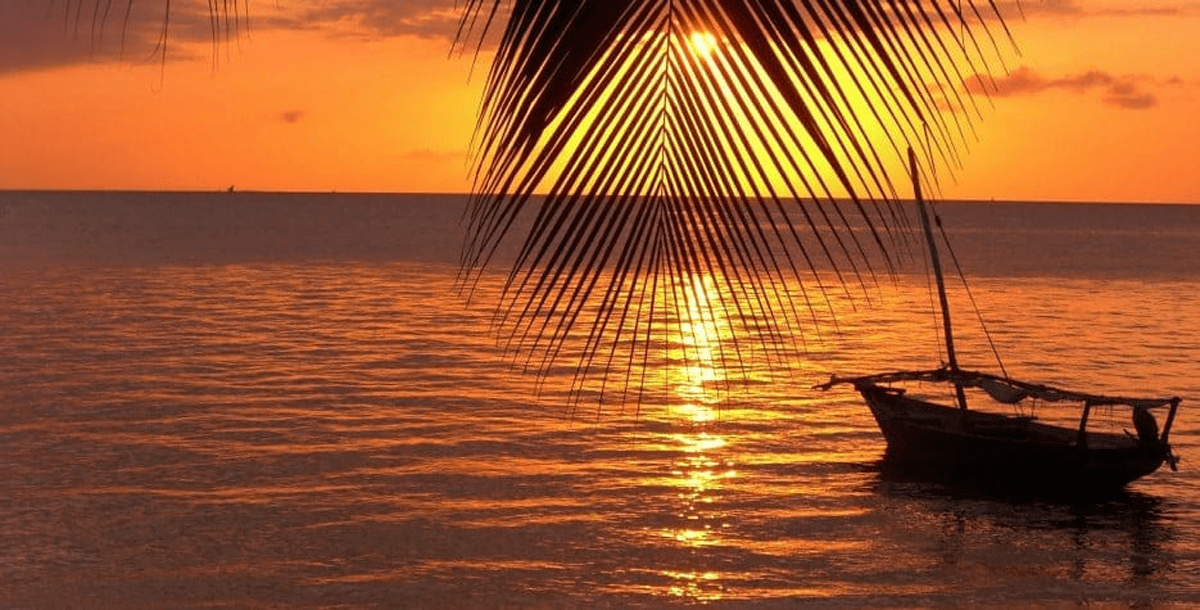
The best sea days are planned around the tide, the wind and the season. Here is where to go, and when.
Where: Mnemba Atoll, from Matemwe
When: Calm dry-season mornings
A protected marine area visited by boat with a guide. Go early for the best visibility.
Where: Kizimkazi, Menai Bay
When: Early morning, year-round
Choose a responsible operator that keeps a respectful distance from the animals.
Where: Stone Town, Nungwi, Kendwa
When: Dry months
A traditional sailing dhow, with cold drinks and fresh fruit as the sun drops.
Where: Paje
When: Around Dec to Mar and Jun to Sep
Learn with certified instructors. The tide decides when the lagoon can be ridden.
Where: Menai Bay
When: Dry months
A day boat with snorkelling, a seafood lunch and a sandbank that appears at low tide.
Where: Paje and Jambiani
When: Low tide
Walk out with the farmers, many of them women, and learn how seaweed is grown and harvested.
Where: Nungwi
When: All year
See rescued turtles, and learn how local people help protect them.
Darker bars mean drier, more reliable weather. Lighter bars mean more rain. The outlined bar marks this month.
Jan
Feb
Mar
Apr
May
Jun
Jul
Aug
Sep
Oct
Nov
Dec
January and February
Warm sea, strong sun and steady northeast winds (kaskazi) on the east coast.
Best for
Beach days and kitesurfing.
Keep in mind
It can be very hot and humid at midday.
March to May
Heavy showers, lush green scenery and very quiet beaches.
Best for
Solitude and better value.
Keep in mind
Some hotels and restaurants close, and some roads can flood.
June to October
Lower humidity, clear skies and the most reliable weather, with breezy southeast winds (kusi).
Best for
Sea days, snorkelling and Stone Town on foot.
Keep in mind
The busiest time, especially July and August. Book early.
November and December
Warm days with short, sharp showers that pass quickly and leave the air fresh.
Best for
A warm sea and a quieter island before the holidays.
Keep in mind
Christmas and New Year fill up early.
Two illustrative routes. Every journey is tailored to your dates, pace and budget, and you can extend, swap or add a private experience at any point.
5 nights, best in any season
9 nights, best in June to October
The questions we hear most often. If yours is not here, ask us.
June to October is cool, dry and the most reliable. December to March is hot and sunny, with steady winds for kitesurfing. March to May brings the long rains, when the island is lush and quiet but some places close.
Three to four nights covers Stone Town and one beach. Five to seven nights lets you enjoy two different coasts without rushing, for example a day of culture followed by a stay in the north or the east.
For guaranteed swimming at all tides, choose the north (Nungwi and Kendwa). For snorkelling at Mnemba, the northeast (Matemwe). For kitesurfing and village life, the southeast (Paje and Jambiani). For culture and food, base yourself in or near Stone Town.
A lot on the east coast, where the sea can retreat hundreds of metres at low tide. Swimming is best at high tide there, and we plan around the tide table. The north and west coasts are far less affected.
Zanzibar is welcoming to visitors and predominantly Muslim. Cover shoulders and knees in Stone Town and in villages, and keep swimwear for the beach and your resort. During Ramadan, eat and drink discreetly in public.
Fast ferries link Dar es Salaam and Zanzibar in around two hours, and short flights connect the island with Dar es Salaam, Arusha and other mainland airports. We arrange transfers at both ends.
Speak to a travel clinic or your doctor well before you travel about malaria prevention and vaccinations. Use reef-friendly sunscreen, drink bottled water and take a hat, because the equatorial sun is strong.

Tell us what you imagine for Zanzibar, whether that is culture, kitesurfing, quiet or all three, and we will shape a thoughtful, personal journey around your dates.
Plan your Zanzibar journey