Slow drives
Game drives across the Katisunga plains, the Chada floodplain and along the Katuma. Katavi rewards patience: a pool, a herd or a pride is worth staying with for a while.
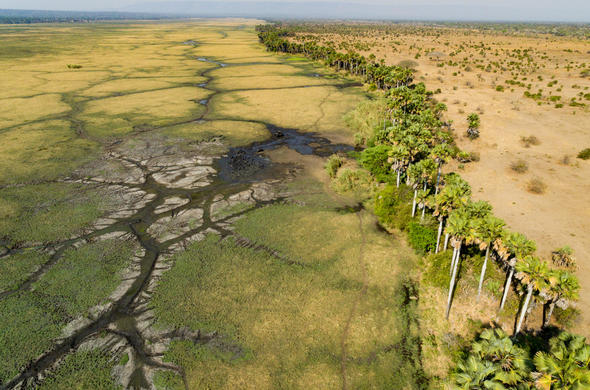
Katavi National Park, western Tanzania
Each dry season the Katuma River shrinks, and hippos, crocodiles, buffalo and lions crowd around what is left. Katavi is one of the least-visited parks in Tanzania, and one of its most dramatic.
Katavi is what happens when a river shrinks and a whole ecosystem has to share what is left.
Katavi is Tanzania’s third-largest national park, 4,471 km² in the far west of the country. It was gazetted in 1974 and enlarged in 1997, and most of it is miombo woodland.
The wildlife lives on the water. The Katuma River feeds the seasonal lakes, Katavi and Chada, and the floodplains around them. As those dry out, the river becomes the place everything has to go.
In the dry season the Katuma is the only reliable drinking water for miles. Lake Katavi and Lake Chada fill in the rains and empty in the dry months, and the wildlife moves with them.
Katavi is a long way from the northern circuit. Most guests fly in, and with so few camps you can go hours without another vehicle.
The park is named for Katabi, a hunter whose spirit is said to live in a tamarind tree near Lake Katavi. People still leave offerings at its base.
Katavi’s year is one story told in water. Drag through the months to see the floodplain drain, the pools shrink and the wildlife move in.
September
The last water
An illustration of the yearly pattern, not a count of animals. Timing shifts with each year’s rain.
September to October
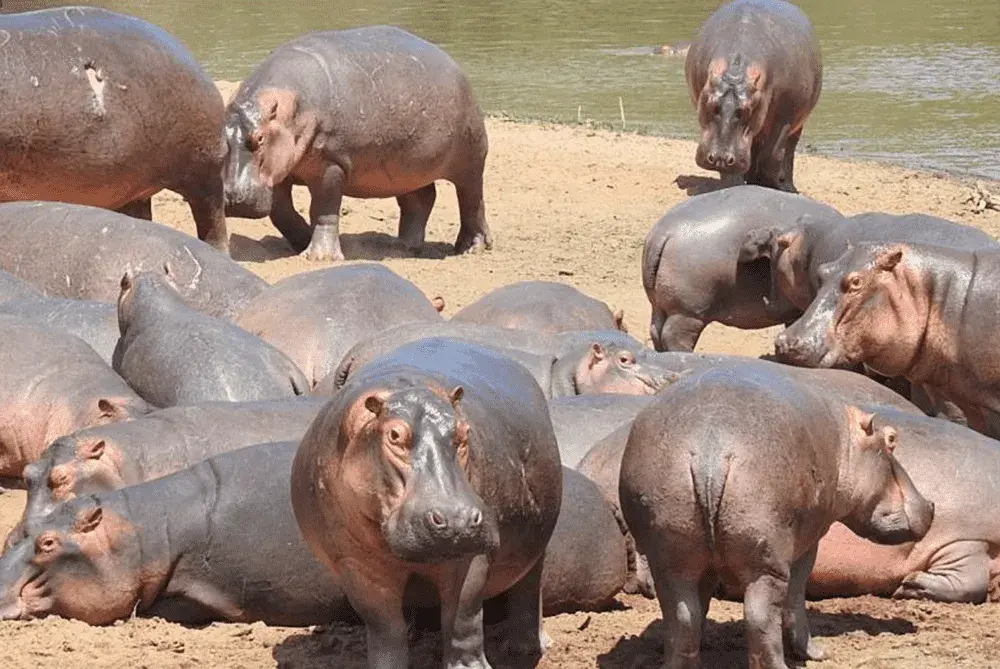
The pools shrink to their deepest holes and everything that needs water has to share them. Hippos pack in, males fight over space and crocodiles rest on the banks or dig into them.
Hot afternoons, dusty air and the most concentrated wildlife of the year. An hour parked at one pool can be worth more than a long drive.
These animals live in Katavi all year, but the water decides when each one is at its best. Filled months mark the strongest chance of seeing them.
The Katuma’s defining animal. As the pools shrink, pods pack tight and males contest the space. A single deep pool can hold around two hundred animals.
Big Nile crocodiles rest on the sandbanks beside the hippos and dig burrows into the banks to get out of the heat.
Katavi is known for some of the largest buffalo herds in Africa. In the late dry season a single herd can pass a thousand animals.
Herds come down to the Katuma and the edges of the floodplains as the dry season deepens.
Prey has to come to the water, and the prides know it. Lions and spotted hyenas work the river edges while leopards keep to thicker cover.
The plains grazers arrive in numbers as the grass dries, with impala and reedbuck alongside them.
The woodland hides shy antelope that are hard to find elsewhere. Katavi is one of the few parks where roan and sable can be seen in the same place.
More than 400 bird species have been recorded in the park. The flooded lakes and plains are at their best while the rains are on.
A guide, not a promise. Nature keeps its own calendar.
Katavi takes its name from Katabi, a legendary hunter of the Wabende people. The story says his spirit lives in a tamarind tree near Lake Katavi.
People still come to the tree to ask for his blessing and leave offerings at its base, and visitors are invited to do the same.
If you would like to stop there, tell your guide. It is a place where people seek blessings, so we go quietly and follow the guide’s lead.
There is no checklist here. The best days are built around one place and a lot of patience.
Game drives across the Katisunga plains, the Chada floodplain and along the Katuma. Katavi rewards patience: a pool, a herd or a pride is worth staying with for a while.
Guided walks with an armed ranger are possible at some camps, within park rules. On foot you notice tracks, birds and insects that a vehicle drives straight past.
Some camps offer fly-camping: a light mesh-tent camp away from the main camp, for a night close to the Katuma and its sounds.
In the last-water months some of the best hours are spent parked beside a single pool, watching hippos, crocodiles and herds come and go.
Katavi is far from everything else, and that is part of the point. The distance keeps the crowds away and is why the park still feels the way it does.
Light aircraft mean soft bags and tight weight limits, so we confirm your allowance before you pack.
Light aircraft land at airstrips at Ikuu, inside the park, and at Sitalike, with flights from Arusha, Dar es Salaam, Ruaha and Mahale. Schedules change with the season, so we confirm the routing before you book.
Mpanda is the nearest town with an airport. The park headquarters at Sitalike is about 40 km to the south, and we arrange the transfer.
Overland routes reach Mpanda through Tabora, but they take a long time. They only make sense as part of a wider road journey.
Each bar shows how the nights are shared between parks. These are starting points, and we shape every journey around your dates, pace and budget.
4 nights, best in July to October
One park, done properly. Two drives a day, a morning on foot and long sits at a hippo pool. Best in the late dry season.
6 nights, best in June to October
Packed pools on the Katuma, then a short flight to Lake Tanganyika, a boat to the lodge and chimpanzee tracking in the Mahale Mountains.
9 nights, best in June to October
Ruaha’s baobab plains, Katavi’s floodplains and Mahale’s lakeshore in one flight-linked journey. The long way round, and the most complete.
Thinking about the south as well? Read about Ruaha National Park.
Katavi suits some travellers better than others. These are the questions worth asking first. If yours is not here, ask us.
Katavi is remote, most travellers arrive by light aircraft and the park has only a small number of camps. It is Tanzania’s third-largest national park, yet it sees far fewer visitors than the northern circuit, and it is common to spend hours without another vehicle in sight.
June to October is the strongest window. September and October are the most concentrated, when the hippo pools are packed and the herds are at the river. November to April is green and good for birds, but tracks can be difficult and some camps close. The year explorer above shows how the park changes month by month.
It can be, if you are happy with long distances and slow days. Katavi is about time spent with wildlife rather than ticking off species. Many travellers pair it with Ruaha or Mahale, or visit after a northern circuit safari.
Yes, especially in the woodland. The bites hurt and the flies are drawn to dark blue and black. Wear light, neutral clothes with long sleeves and trousers, and follow your guide’s advice in wooded stretches.
Guided walks with an armed ranger are possible at some camps, subject to park rules and conditions. Some camps also offer fly-camping. We confirm what is available for your camp and dates before you book.
Three nights is a good introduction. Four or five nights gives time for long sits at the pools, a walk and a slower pace. If you continue to Mahale for chimpanzees, allow at least two or three nights there.
Yes. Malaria is present in western Tanzania. Speak to your doctor or a travel clinic before you travel, and pack repellent and long, light clothing.
Light aircraft have tight weight limits and usually need soft bags. We confirm the current allowance for your flights before you pack.
Katavi has few camps, and the late dry season is the most sought-after time, so it helps to plan early. Share your dates, how long you have and what you hope to see, and we will shape the journey.
Plan a Katavi safari